File:Diatomaceous Earth BrightField.jpg
From WikiMD's WELLNESSPEDIA
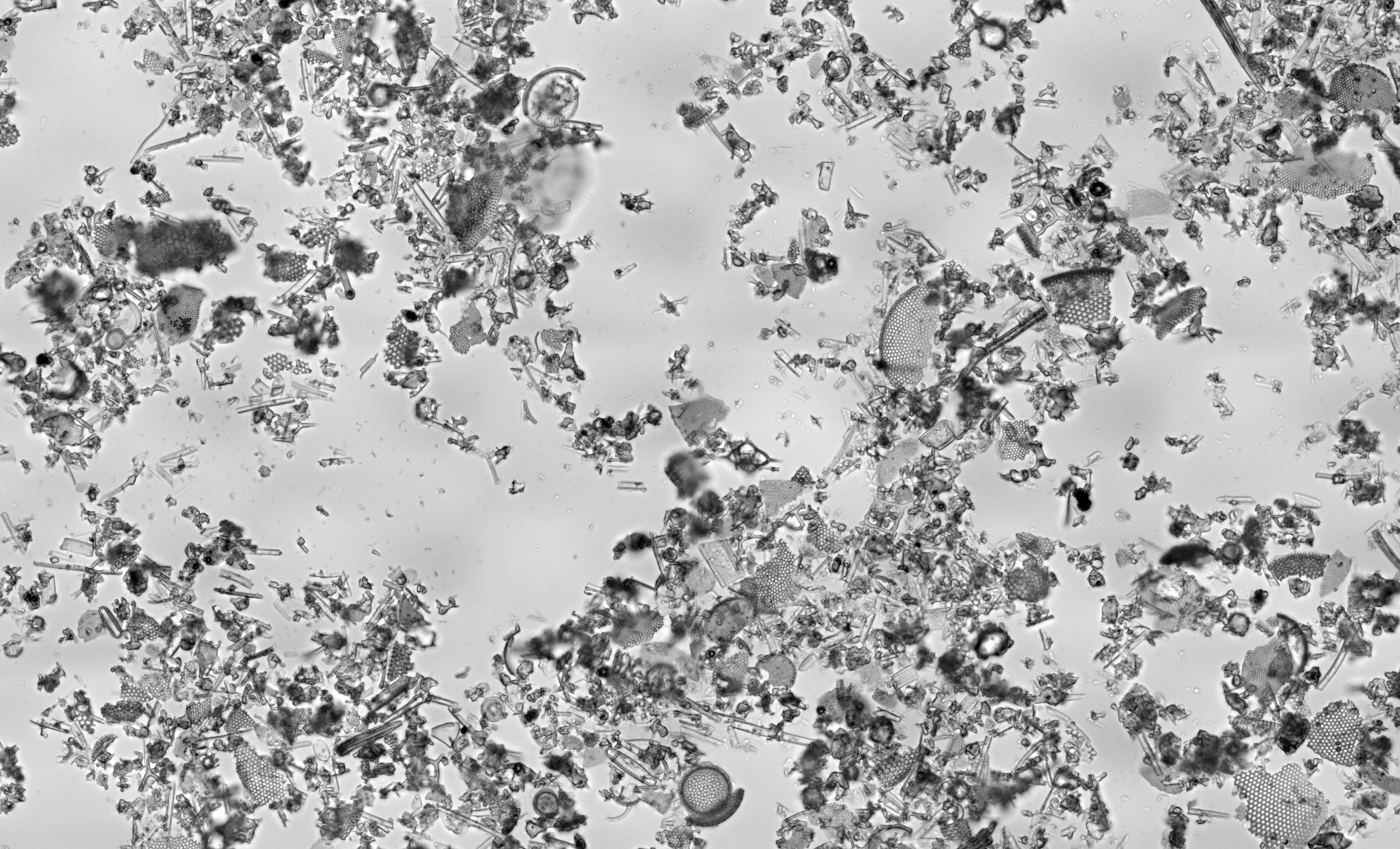
Size of this preview: 800 × 485 pixels. Other resolutions: 2,560 × 1,553 pixels | 7,062 × 4,284 pixels.
Original file (7,062 × 4,284 pixels, file size: 7.89 MB, MIME type: image/jpeg)
Summary[edit]
| Summary | |
|---|---|
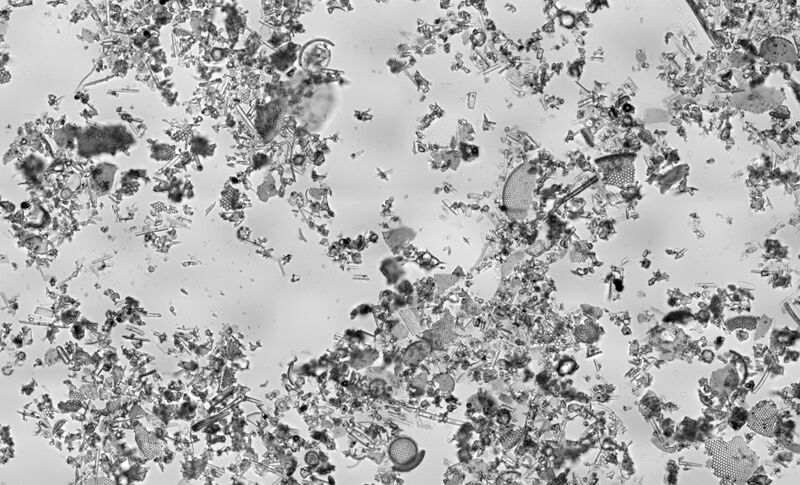
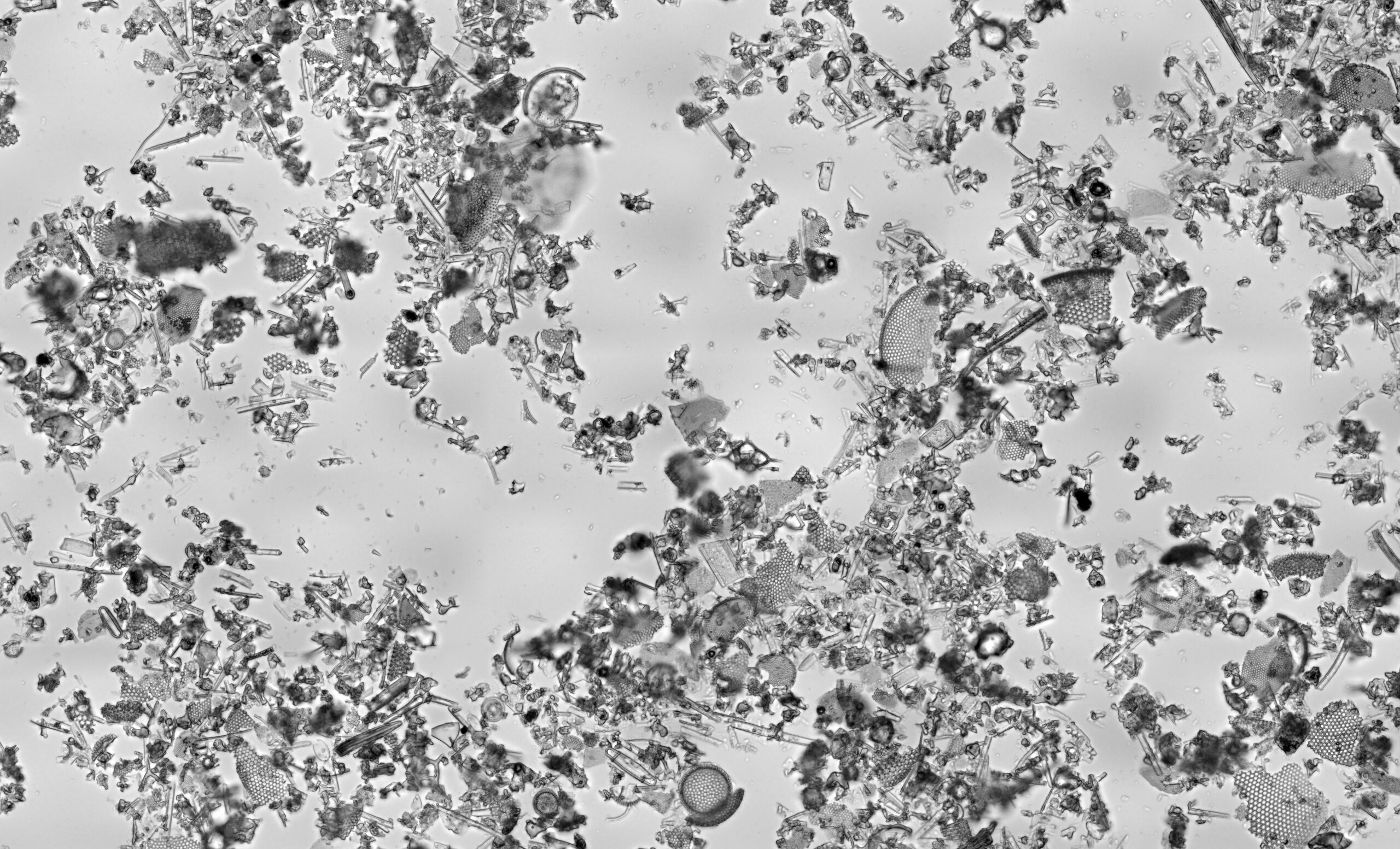
| Description | Diatomaceous earth, also known as diatomite or kieselgur, as viewed under bright field illumination on a light microscope. Diatomaceous earth is a soft, siliceous, sedementary rock made up of the cell walls/shells of single cell diatoms and readily crumbles to a fine powder. Diatom cell walls are bivalve, i.e. made up of two halves, and are made up of biogenic silica; silica synthesised in the diatom cell by the polymerisation of silicic acid. This sample consists of a mixture of centric (radially symmetric) and pennate (bilaterally symmetric) diatoms. The primary uses of diatomaceous earth are for cleaning (scouring), filtration, heat-resistive insulation and as an inert absorbent substrate. One of the most famous uses was by Alfred Nobel who developed dynamite; a mixture of diatomaceous earth and nitroglycerin. This image of diatomaceous earth particles in water is at a scale of 6.236 pixels/μm, the entire image covers a region of approximately 1.13 by 0.69 mm. |
| Source | Wikimedia Commons file page |
| Author | Zephyris |
| Permission | See original Commons license details. |
Licensing[edit]
Creative Commons Attribution-ShareAlike 3.0 Unported (CC BY-SA 3.0)
This file is licensed under the Creative Commons Attribution-ShareAlike 3.0 license.
Official license: CC BY-SA 3.0
License page: CC BY-SA 3.0
Original attribution and file history: Wikimedia Commons
File history
Click on a date/time to view the file as it appeared at that time.
| Date/Time | Thumbnail | Dimensions | User | Comment | |
|---|---|---|---|---|---|
| current | 13:39, 8 June 2026 | | 7,062 × 4,284 (7.89 MB) | Maintenance script (talk | contribs) | == Summary == Importing file |
You cannot overwrite this file.
File usage
The following page uses this file: