Medicine in ancient Rome
Medicine in Ancient Rome refers to the medical practices and beliefs in Ancient Rome, which were heavily influenced by earlier Greek medical knowledge. The Romans made various advancements in medical knowledge and practice, many of which have had lasting impacts on medicine as we know it today.
History[edit]
The history of Roman medicine is closely tied to the history of the Roman Empire. The Romans adopted much of their medical knowledge from the Greeks, who were considered the pioneers of medical science. However, the Romans also made significant contributions of their own, particularly in the areas of public health and surgery.
Public Health[edit]
One of the most notable aspects of Roman medicine was its emphasis on public health. The Romans were pioneers in the field of public health and implemented a number of measures to prevent disease and promote health in the population. These included the construction of aqueducts to supply clean water, the building of public baths for hygiene, and the establishment of a comprehensive system of roads and sewage systems to remove waste.
Surgery[edit]
Roman medicine also made significant advancements in the field of surgery. Roman surgeons were highly skilled and performed a variety of procedures, including amputations, cataract surgeries, and caesarean sections. They also developed a range of surgical tools, many of which are still in use today.
Medical Education[edit]
Medical education in Ancient Rome was largely based on the teachings of Greek physicians, particularly Hippocrates. However, Roman physicians also contributed to the body of medical knowledge through their own observations and experiences. Medical education was not formalized in Ancient Rome, and most physicians learned their trade through apprenticeships.
Conclusion[edit]
While much of Roman medicine was based on Greek knowledge, the Romans made significant contributions to the field, particularly in the areas of public health and surgery. Their emphasis on hygiene and sanitation, as well as their development of surgical techniques and tools, have had a lasting impact on modern medicine.
| Ancient Rome topics | ||||||||
|---|---|---|---|---|---|---|---|---|
|
| History of Medicine | ||||||||||
|---|---|---|---|---|---|---|---|---|---|---|
This History of Medicine related article is a stub.
|
 | This medical article is a stub. You can help WikiMD by expanding the page. |
-
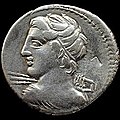 Coin of Vejovis
 -
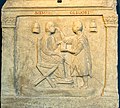 Depiction of eye examination
 -
 Dioscorides Vienna (portrait)
 -
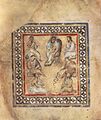 Galenosgruppe (Wiener Dioskurides)
 -
 Portrait bust of Asclepiades
 -
 Aulus Cornelius Celsus
 -
 Roman Military Hospital - Valetudinarium - late 1st c. A.D.
 -
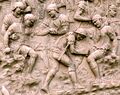 Capsarius (Trajansäule)
 -
 Museo di Napoli - Strumenti di chirurgia
 -
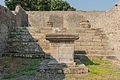 Autel temple Esculape Pompeii
 -
 Dioscorides De Materia Medica Spain 12th 13th century


.jpg)
.jpg)


.jpg)
_-_n._11141_-_Museo_di_Napoli_-_Strumenti_di_chirurgia.jpg)


Medical Disclaimer: WikiMD is for informational purposes only and is not a substitute for professional medical advice. Content may be inaccurate or outdated and should not be used for diagnosis or treatment. Always consult your healthcare provider for medical decisions. Verify information with trusted sources such as CDC.gov and NIH.gov. By using this site, you agree that WikiMD is not liable for any outcomes related to its content. See full disclaimer.
Credits:Most images are courtesy of Wikimedia commons, and templates, categories Wikipedia, licensed under CC BY SA or similar.
Translate page: - East Asian
中文,
日本,
한국어,
South Asian
हिन्दी,
தமிழ்,
తెలుగు,
Urdu,
ಕನ್ನಡ,
Southeast Asian
Indonesian,
Vietnamese,
Thai,
မြန်မာဘာသာ,
বাংলা
European
español,
Deutsch,
français,
Greek,
português do Brasil,
polski,
română,
русский,
Nederlands,
norsk,
svenska,
suomi,
Italian
Middle Eastern & African
عربى,
Turkish,
Persian,
Hebrew,
Afrikaans,
isiZulu,
Kiswahili,
Other
Bulgarian,
Hungarian,
Czech,
Swedish,
മലയാളം,
मराठी,
ਪੰਜਾਬੀ,
ગુજરાતી,
Portuguese,
Ukrainian

