Low-molecular-weight heparin
Low-molecular-weight heparin (LMWH) is a class of anticoagulant medications. They are used in the prevention of blood clots and treatment of venous thromboembolism (deep vein thrombosis and pulmonary embolism) and in the treatment of myocardial infarction.
History[edit]
LMWHs were first derived from unfractionated heparin in the late 1970s. They have predictable pharmacokinetics and a lower risk of bleeding compared to unfractionated heparin, and can be administered once or twice daily.
Medical uses[edit]
LMWHs are used in the prevention and treatment of deep vein thrombosis, pulmonary embolism, and in the treatment of myocardial infarction. They are also used in the prevention of clotting during dialysis and in the prevention of clotting in the extracorporeal circuit during cardiac surgery.
Mechanism of action[edit]
LMWHs bind to the enzyme inhibitor antithrombin III (ATIII). The LMWH/ATIII complex in turn binds to and inactivates thrombin and factor Xa, two key components involved in blood coagulation.
Side effects[edit]
The most common side effect of LMWHs is bleeding. Other side effects can include heparin-induced thrombocytopenia (HIT), hypersensitivity reactions, skin necrosis, and osteoporosis with long-term use.
See also[edit]

This WikiMD article can only be edited by registered and verified editors. You can log in or register.
Low-molecular-weight heparin[edit]
-
Fraxiparine 0.4ml syringe on yellow background
-
Reduction reaction diagram
-
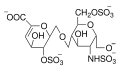 UA(2S)-GlcNS(6S) chemical structure
-GlcNS(6S).svg)

Medical Disclaimer: WikiMD is for informational purposes only and is not a substitute for professional medical advice. Content may be inaccurate or outdated and should not be used for diagnosis or treatment. Always consult your healthcare provider for medical decisions. Verify information with trusted sources such as CDC.gov and NIH.gov. By using this site, you agree that WikiMD is not liable for any outcomes related to its content. See full disclaimer.
Credits:Most images are courtesy of Wikimedia commons, and templates, categories Wikipedia, licensed under CC BY SA or similar.
Translate page: - East Asian
中文,
日本,
한국어,
South Asian
हिन्दी,
தமிழ்,
తెలుగు,
Urdu,
ಕನ್ನಡ,
Southeast Asian
Indonesian,
Vietnamese,
Thai,
မြန်မာဘာသာ,
বাংলা
European
español,
Deutsch,
français,
Greek,
português do Brasil,
polski,
română,
русский,
Nederlands,
norsk,
svenska,
suomi,
Italian
Middle Eastern & African
عربى,
Turkish,
Persian,
Hebrew,
Afrikaans,
isiZulu,
Kiswahili,
Other
Bulgarian,
Hungarian,
Czech,
Swedish,
മലയാളം,
मराठी,
ਪੰਜਾਬੀ,
ગુજરાતી,
Portuguese,
Ukrainian


