SARS-CoV-1
SARS-CoV-1 (Severe Acute Respiratory Syndrome Coronavirus 1) is a strain of coronavirus that caused the SARS outbreak in 2002-2004. It is an enveloped, positive-sense, single-stranded RNA virus which infects the epithelial cells within the lungs. The virus enters the host cell by binding to the angiotensin-converting enzyme 2 (ACE2) receptor.
Origin[edit]
SARS-CoV-1 is believed to have originated from bats, and was transmitted to humans via palm civets, which were sold in live-animal markets in Guangdong province, China.
Symptoms[edit]
The symptoms of SARS-CoV-1 infection include high fever, malaise, headache, body aches, and occasionally diarrhea. After 2 to 7 days, the patient may develop a dry cough and have trouble breathing.
Transmission[edit]
SARS-CoV-1 is primarily transmitted through respiratory droplets during close face-to-face contact. It can also spread by touching a contaminated surface and then touching the mouth, nose, or eyes.
Prevention and Treatment[edit]
There is currently no specific treatment for SARS-CoV-1. Management of the disease is primarily supportive, including antipyretic therapy for fever and supplemental oxygen for respiratory distress. Prevention measures include hand hygiene, use of personal protective equipment, and isolation of suspected cases.
See Also[edit]

This WikiMD article can only be edited by registered and verified editors. You can log in or register.
SARS-CoV-1[edit]
-
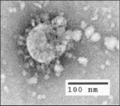 SARS-CoV-1
 -
 SARS-CoV-1
 -
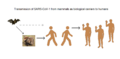 SARS-CoV-1


Medical Disclaimer: WikiMD is for informational purposes only and is not a substitute for professional medical advice. Content may be inaccurate or outdated and should not be used for diagnosis or treatment. Always consult your healthcare provider for medical decisions. Verify information with trusted sources such as CDC.gov and NIH.gov. By using this site, you agree that WikiMD is not liable for any outcomes related to its content. See full disclaimer.
Credits:Most images are courtesy of Wikimedia commons, and templates, categories Wikipedia, licensed under CC BY SA or similar.
Translate page: - East Asian
中文,
日本,
한국어,
South Asian
हिन्दी,
தமிழ்,
తెలుగు,
Urdu,
ಕನ್ನಡ,
Southeast Asian
Indonesian,
Vietnamese,
Thai,
မြန်မာဘာသာ,
বাংলা
European
español,
Deutsch,
français,
Greek,
português do Brasil,
polski,
română,
русский,
Nederlands,
norsk,
svenska,
suomi,
Italian
Middle Eastern & African
عربى,
Turkish,
Persian,
Hebrew,
Afrikaans,
isiZulu,
Kiswahili,
Other
Bulgarian,
Hungarian,
Czech,
Swedish,
മലയാളം,
मराठी,
ਪੰਜਾਬੀ,
ગુજરાતી,
Portuguese,
Ukrainian

