Mediastinal lymphadenopathy
Mediastinal Lymphadenopathy is a medical condition characterized by the enlargement of the lymph nodes located in the mediastinum, the area in the center of the chest that separates the lungs. This condition is often a sign of an underlying disease or infection.
Causes[edit]
Mediastinal lymphadenopathy can be caused by a variety of conditions, including infections, cancer, and autoimmune diseases. Some of the most common causes include:
Symptoms[edit]
The symptoms of mediastinal lymphadenopathy can vary depending on the underlying cause. Some people may not experience any symptoms, while others may experience:
Diagnosis[edit]
The diagnosis of mediastinal lymphadenopathy often involves a combination of medical history, physical examination, and diagnostic tests. These tests may include:
- Chest X-ray
- Computed tomography (CT) scan
- Magnetic resonance imaging (MRI)
- Positron emission tomography (PET) scan
- Endobronchial ultrasound (EBUS)
- Mediastinoscopy
Treatment[edit]
The treatment for mediastinal lymphadenopathy depends on the underlying cause. Treatment options may include:
- Antibiotics for infections
- Chemotherapy or radiation therapy for cancer
- Steroids for autoimmune diseases
See also[edit]
References[edit]

This WikiMD article can only be edited by registered and verified editors. You can log in or register.
Mediastinal lymphadenopathy[edit]
-
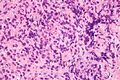 Primary mediastinal large B-cell lymphoma - very high magnification


Medical Disclaimer: WikiMD is for informational purposes only and is not a substitute for professional medical advice. Content may be inaccurate or outdated and should not be used for diagnosis or treatment. Always consult your healthcare provider for medical decisions. Verify information with trusted sources such as CDC.gov and NIH.gov. By using this site, you agree that WikiMD is not liable for any outcomes related to its content. See full disclaimer.
Credits:Most images are courtesy of Wikimedia commons, and templates, categories Wikipedia, licensed under CC BY SA or similar.
Translate page: - East Asian
中文,
日本,
한국어,
South Asian
हिन्दी,
தமிழ்,
తెలుగు,
Urdu,
ಕನ್ನಡ,
Southeast Asian
Indonesian,
Vietnamese,
Thai,
မြန်မာဘာသာ,
বাংলা
European
español,
Deutsch,
français,
Greek,
português do Brasil,
polski,
română,
русский,
Nederlands,
norsk,
svenska,
suomi,
Italian
Middle Eastern & African
عربى,
Turkish,
Persian,
Hebrew,
Afrikaans,
isiZulu,
Kiswahili,
Other
Bulgarian,
Hungarian,
Czech,
Swedish,
മലയാളം,
मराठी,
ਪੰਜਾਬੀ,
ગુજરાતી,
Portuguese,
Ukrainian

