Overexploitation
Overexploitation, also known as overharvesting, refers to the excessive use or extraction of a resource until it is depleted. This practice is often driven by economic incentives and can lead to the extinction of species, loss of biodiversity, and disruption of ecosystems. Overexploitation is a major threat to global biodiversity and is particularly prevalent in fisheries, forestry, and wildlife hunting.
Causes[edit]
Overexploitation is primarily driven by human activity. The main causes include:
- Economic demand: High demand for certain resources can lead to overexploitation. This is often the case with valuable resources such as timber, fish, and wildlife.
- Population growth: Rapid population growth can increase the demand for resources, leading to their overexploitation.
- Technology: Advances in technology can make it easier to extract resources, which can lead to overexploitation.
- Policy and regulation: Lack of effective policies and regulations can contribute to overexploitation.
Effects[edit]
The effects of overexploitation can be severe and long-lasting. They include:
- Biodiversity loss: Overexploitation can lead to the extinction of species and loss of biodiversity.
- Ecosystem disruption: Overexploitation can disrupt ecosystems and alter their functioning.
- Resource depletion: Overexploitation can deplete resources, making them unavailable for future use.
Prevention and mitigation[edit]
There are several strategies for preventing and mitigating overexploitation:
- Sustainable use: This involves using resources in a way that meets current needs without compromising the ability of future generations to meet their own needs.
- Conservation: Conservation efforts can help protect species and ecosystems from overexploitation.
- Policy and regulation: Effective policies and regulations can help control the extraction of resources and prevent overexploitation.
See also[edit]

This WikiMD article can only be edited by registered and verified editors. You can log in or register.
-
 Overexploitation
 -
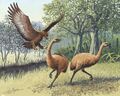 Giant Haast's eagle attacking New Zealand moa
 -
 Cows on Selsley Common
 -
 Bluefin tuna
 -
 Gordon River clearcut
 -
 Maldives fish
 -
 Overgrazing
 -
 Carolina parakeet
 -
 Kelp forest


Medical Disclaimer: WikiMD is for informational purposes only and is not a substitute for professional medical advice. Content may be inaccurate or outdated and should not be used for diagnosis or treatment. Always consult your healthcare provider for medical decisions. Verify information with trusted sources such as CDC.gov and NIH.gov. By using this site, you agree that WikiMD is not liable for any outcomes related to its content. See full disclaimer.
Credits:Most images are courtesy of Wikimedia commons, and templates, categories Wikipedia, licensed under CC BY SA or similar.
Translate page: - East Asian
中文,
日本,
한국어,
South Asian
हिन्दी,
தமிழ்,
తెలుగు,
Urdu,
ಕನ್ನಡ,
Southeast Asian
Indonesian,
Vietnamese,
Thai,
မြန်မာဘာသာ,
বাংলা
European
español,
Deutsch,
français,
Greek,
português do Brasil,
polski,
română,
русский,
Nederlands,
norsk,
svenska,
suomi,
Italian
Middle Eastern & African
عربى,
Turkish,
Persian,
Hebrew,
Afrikaans,
isiZulu,
Kiswahili,
Other
Bulgarian,
Hungarian,
Czech,
Swedish,
മലയാളം,
मराठी,
ਪੰਜਾਬੀ,
ગુજરાતી,
Portuguese,
Ukrainian

