Pulsatilla vulgaris
Pulsatilla vulgaris, also known as the Pasqueflower, is a species of flowering plant belonging to the family Ranunculaceae. It is native to Europe and is known for its bell-shaped, purple flowers and feathery seed heads.
Description[edit]
Pulsatilla vulgaris is a perennial herb that grows up to 30 cm in height. The leaves are finely divided and appear after the flowers. The flowers are bell-shaped, up to 8 cm in diameter, and are usually purple, although there are white and red varieties. The flowers are followed by distinctive, feathery seed heads.
Distribution and habitat[edit]
Pulsatilla vulgaris is native to Europe, where it is found from the UK and France eastwards to western Russia. It grows in dry, calcareous grassland and heathland, often on south-facing slopes.
Cultivation[edit]
Pulsatilla vulgaris is cultivated as an ornamental plant in gardens for its attractive flowers and seed heads. It prefers a sunny position in well-drained soil. It is hardy and can tolerate cold winters.
Uses[edit]
In traditional medicine, Pulsatilla vulgaris has been used to treat various conditions, including menstrual problems, headaches, and skin conditions. However, it contains toxic compounds and should not be used without medical supervision.
Conservation[edit]
Pulsatilla vulgaris is threatened in some parts of its range due to habitat loss and over-collection. It is protected by law in several countries.
See also[edit]

This flora-related article is a stub. You can help WikiMD by expanding it.
-
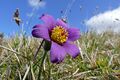 Pulsatilla vulgaris
 -
Pulsatilla vulgaris
-
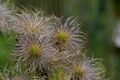 Pulsatilla vulgaris
 -
Pulsatilla vulgaris
-
Pulsatilla vulgaris
-
Pulsatilla vulgaris
-
Pulsatilla vulgaris
_(17022184800).jpg)


Medical Disclaimer: WikiMD is for informational purposes only and is not a substitute for professional medical advice. Content may be inaccurate or outdated and should not be used for diagnosis or treatment. Always consult your healthcare provider for medical decisions. Verify information with trusted sources such as CDC.gov and NIH.gov. By using this site, you agree that WikiMD is not liable for any outcomes related to its content. See full disclaimer.
Credits:Most images are courtesy of Wikimedia commons, and templates, categories Wikipedia, licensed under CC BY SA or similar.
Translate page: - East Asian
中文,
日本,
한국어,
South Asian
हिन्दी,
தமிழ்,
తెలుగు,
Urdu,
ಕನ್ನಡ,
Southeast Asian
Indonesian,
Vietnamese,
Thai,
မြန်မာဘာသာ,
বাংলা
European
español,
Deutsch,
français,
Greek,
português do Brasil,
polski,
română,
русский,
Nederlands,
norsk,
svenska,
suomi,
Italian
Middle Eastern & African
عربى,
Turkish,
Persian,
Hebrew,
Afrikaans,
isiZulu,
Kiswahili,
Other
Bulgarian,
Hungarian,
Czech,
Swedish,
മലയാളം,
मराठी,
ਪੰਜਾਬੀ,
ગુજરાતી,
Portuguese,
Ukrainian


