Virology
Virology
| System | Infectious disease, Microbiology, Immunology |
|---|---|
| Focus | |
| Subdivisions | |
| Significant diseases | Viral infection, Influenza, COVID-19, HIV/AIDS, Hepatitis, Measles, Rabies, Ebola virus disease |
| Significant tests | Polymerase chain reaction, Viral culture, Serology, Antigen test, Genome sequencing |
| Specialist | Virologist, Infectious disease specialist, Clinical microbiologist |
| Glossary |
Virology is the branch of biology, microbiology, medicine, and infectious disease that studies viruses, viral infections, viral replication, viral genetics, viral pathogenesis, antiviral drugs, vaccines, and the interaction between viruses and their host organisms. It is a major field within medical microbiology and has important applications in public health, epidemiology, immunology, molecular biology, genomics, oncology, veterinary medicine, plant pathology, and biotechnology.

Viruses are small infectious agents that require living cells to replicate. Unlike bacteria, fungi, and protozoa, viruses are not cellular organisms. A virus generally consists of a viral genome made of either DNA or RNA, surrounded by a protective protein coat called a capsid. Some viruses also possess a lipid viral envelope derived from host cell membranes. Virology examines how these agents enter cells, replicate, spread, evade the immune system, cause disease, and evolve.
Overview[edit]
Virology includes the study of both medically important viruses and viruses that infect animals, plants, fungi, bacteria, and archaea. Viruses that infect bacteria are known as bacteriophages or phages. Human and animal viruses are especially important in clinical medicine because they cause diseases ranging from mild common cold infections to life-threatening conditions such as rabies, viral hemorrhagic fever, AIDS, hepatitis, encephalitis, and viral pneumonia.
Major areas of virology include:
- Medical virology - the study of viruses that cause disease in humans
- Molecular virology - the study of viral structure, replication, gene expression, and molecular mechanisms
- Clinical virology - diagnosis and management of viral infections in patients
- Immunovirology - interactions between viruses and the immune system
- Viral oncology - study of cancer-causing viruses
- Environmental virology - study of viruses in water, soil, air, and ecosystems
- Evolutionary virology - study of viral evolution, mutation, recombination, and emergence
- Veterinary virology - study of viruses affecting animals
- Plant virology - study of viruses affecting plants
- Phage biology - study of bacteriophages and their applications
Definition of a virus[edit]
A virus is an infectious agent that can replicate only inside the living cells of a host. Viruses infect all forms of life, including animals, plants, bacteria, archaea, fungi, and protists. They are considered obligate intracellular parasites because they depend on host cell machinery for protein synthesis, energy metabolism, and many steps of replication.
A typical virus contains:
- A viral genome composed of DNA or RNA
- A capsid made of viral proteins
- Optional viral envelope in enveloped viruses
- Optional viral enzymes such as RNA-dependent RNA polymerase, reverse transcriptase, integrase, or neuraminidase
- Surface proteins used for host cell attachment and entry
History of virology[edit]
The history of virology began with observations that some infectious diseases were caused by agents smaller than bacteria. In the late 19th century, scientists studying tobacco mosaic disease found that the infectious agent could pass through filters that trapped bacteria. This led to the concept of a "filterable virus."
Important milestones in virology include:
- Discovery of tobacco mosaic virus, one of the first recognized viruses
- Identification of bacteriophages as viruses that infect bacteria
- Development of electron microscopy, allowing visualization of viral particles
- Discovery of DNA viruses and RNA viruses
- Development of cell culture methods for growing viruses
- Development of viral vaccines, including vaccines against smallpox, polio, measles, mumps, rubella, influenza, hepatitis B, human papillomavirus, and COVID-19
- Discovery of reverse transcriptase in retroviruses
- Identification of HIV as the cause of AIDS
- Use of polymerase chain reaction and genome sequencing for viral diagnosis
- Development of mRNA vaccine technology
- Expansion of viral metagenomics and global surveillance for emerging viruses
Virus structure[edit]
The structure of viruses varies greatly, but most viruses contain a genome enclosed within a protein shell. Viral structure is closely related to viral stability, transmission, host range, immune recognition, and disease severity.
Viral genome[edit]
The viral genome contains the genetic information needed to produce viral proteins and replicate the virus. Viral genomes may be:
- Double-stranded DNA
- Single-stranded DNA
- Double-stranded RNA
- Positive-sense single-stranded RNA
- Negative-sense single-stranded RNA
- RNA with a DNA intermediate
- DNA with an RNA intermediate
Viral genomes may be linear, circular, segmented, or non-segmented. Segmented genomes, such as those of influenza virus, can undergo genetic reassortment, which may contribute to pandemic emergence.
Capsid[edit]
The capsid is the protein shell that protects the viral genome. It is made of repeating protein units called capsomeres. Capsids may have several types of symmetry:
The capsid helps protect the genome from environmental damage and may assist in attachment, entry, and delivery of the genome into host cells.
Viral envelope[edit]
An enveloped virus has a lipid membrane surrounding the capsid. The envelope is usually derived from host cell membranes during viral budding. It contains viral glycoproteins that mediate attachment and entry.
Examples of enveloped viruses include:
- Influenza virus
- Human immunodeficiency virus
- Coronavirus
- Herpesvirus
- Ebola virus
- Measles virus
- Rabies virus
- Hepatitis C virus
Enveloped viruses are often sensitive to drying, heat, detergents, alcohol, and disinfectants. Non-enveloped viruses are generally more resistant in the environment.
Viral surface proteins[edit]
Viral surface proteins are critical for host cell receptor binding, tissue tropism, immune recognition, and vaccine design. Examples include:
- Spike protein of coronavirus
- Hemagglutinin and neuraminidase of influenza virus
- Envelope glycoproteins of HIV
- Glycoprotein of rabies virus
- Capsid proteins of non-enveloped viruses
Classification of viruses[edit]
Viruses are classified based on genome type, replication strategy, structure, host range, and evolutionary relationships.
Baltimore classification[edit]
The Baltimore classification groups viruses according to the nature of their genome and how they produce messenger RNA. It is one of the most important systems in virology.
| Group | Genome type | Examples |
|---|---|---|
| Group I | Double-stranded DNA virus | Herpesvirus, Adenovirus, Papillomavirus |
| Group II | Single-stranded DNA virus | Parvovirus |
| Group III | Double-stranded RNA virus | Rotavirus |
| Group IV | Positive-sense single-stranded RNA virus | Coronavirus, Flavivirus, Picornavirus |
| Group V | Negative-sense single-stranded RNA virus | Influenza virus, Rabies virus, Ebola virus, Measles virus |
| Group VI | Single-stranded RNA retrovirus | Human immunodeficiency virus |
| Group VII | Double-stranded DNA reverse-transcribing virus | Hepatitis B virus |
Taxonomic classification[edit]
Formal virus taxonomy is organized by the International Committee on Taxonomy of Viruses. Viral classification may include:
Common virus families important in medicine include:
- Adenoviridae
- Herpesviridae
- Papillomaviridae
- Polyomaviridae
- Poxviridae
- Parvoviridae
- Coronaviridae
- Orthomyxoviridae
- Paramyxoviridae
- Flaviviridae
- Picornaviridae
- Retroviridae
- Rhabdoviridae
- Filoviridae
- Togaviridae
- Reoviridae
- Caliciviridae
- Hepadnaviridae
- Bunyavirales
- Arenaviridae
Viral replication[edit]
Viral replication is the process by which viruses produce new viral particles inside host cells. Although details vary among virus families, most viral replication cycles include several common steps.
Attachment[edit]
Attachment occurs when a virus binds to specific cell surface receptors on a susceptible host cell. Receptor binding helps determine tissue tropism, host range, and disease pattern.
Examples include:
- HIV binding to CD4 and co-receptors such as CCR5 or CXCR4
- SARS-CoV-2 binding to ACE2
- Influenza virus binding to sialic acid
- Epstein-Barr virus binding to receptors on B lymphocytes
Entry[edit]
Viruses enter cells by several mechanisms, including:
- Endocytosis
- Membrane fusion
- Direct genome injection
- Penetration through cell membranes
Enveloped viruses often enter by fusion of the viral envelope with a host membrane. Non-enveloped viruses may enter through endocytosis followed by capsid disassembly.
Uncoating[edit]
During uncoating, the viral genome is released from the capsid into the cytoplasm or nucleus. This step makes the genome available for transcription, translation, or replication.
Transcription and translation[edit]
Viruses must produce viral messenger RNA so that host ribosomes can synthesize viral proteins. DNA viruses often use host or viral DNA-dependent RNA polymerases. RNA viruses may need viral polymerases such as RNA-dependent RNA polymerase. Retroviruses use reverse transcriptase to convert RNA into DNA.
Genome replication[edit]
Viral genome replication depends on the virus type. DNA viruses often replicate in the cell nucleus, while many RNA viruses replicate in the cytoplasm. Exceptions exist, including poxviruses, which are DNA viruses that replicate in the cytoplasm.
Assembly[edit]
New viral genomes and proteins assemble into immature or mature virions. Assembly may occur in the nucleus, cytoplasm, or at cellular membranes.
Release[edit]
Viruses leave infected cells by:
- Cell lysis
- Budding
- Exocytosis
- Cell-to-cell spread
Non-enveloped viruses often cause cell lysis. Enveloped viruses often bud from host membranes.
Viral genetics and evolution[edit]
Viruses evolve rapidly through mutation, recombination, reassortment, selection, and genetic drift. RNA viruses often have high mutation rates because many viral RNA polymerases lack proofreading activity.
Important mechanisms include:
- Mutation - changes in the viral genome
- Genetic drift - gradual accumulation of mutations
- Antigenic drift - immune escape through gradual antigenic change
- Antigenic shift - major antigenic change, often through reassortment
- Recombination - exchange of genetic material between related viruses
- Reassortment - exchange of genome segments in segmented viruses
- Quasispecies - genetically diverse viral populations within a host
Viral evolution is important in influenza pandemics, HIV drug resistance, SARS-CoV-2 variants, hepatitis C virus diversity, and emergence of zoonotic diseases.
Host range and tissue tropism[edit]
Host range refers to the species a virus can infect. Tissue tropism refers to the cell types or tissues a virus preferentially infects. These properties are influenced by:
- Receptor availability
- Host cell enzymes
- Innate immune defenses
- Body temperature
- Tissue environment
- Viral entry proteins
- Host restriction factors
Examples include:
- Hepatitis B virus and hepatitis C virus infecting the liver
- Rabies virus infecting the nervous system
- HIV infecting CD4 T cells and macrophages
- Influenza virus infecting the respiratory tract
- Norovirus infecting the gastrointestinal tract
- Human papillomavirus infecting epithelial cells
Viral pathogenesis[edit]
Viral pathogenesis is the process by which viruses cause disease. Disease may result from direct viral damage, immune-mediated injury, inflammation, persistent infection, oncogenic transformation, or systemic complications.
Mechanisms of viral disease include:
- Direct cytopathic effect
- Cell lysis
- Apoptosis
- Necrosis
- Inflammation
- Immune complex formation
- Autoimmunity
- Cytokine storm
- Immunosuppression
- Oncogenesis
- Latency and reactivation
Clinical outcomes depend on viral virulence, infectious dose, route of exposure, host immunity, age, pregnancy, comorbidities, vaccination status, and genetic susceptibility.
Transmission of viruses[edit]
Viruses are transmitted through multiple routes. Understanding transmission is essential for infection control, public health, and epidemic prevention.
Respiratory transmission[edit]
Respiratory viruses spread through droplets, aerosols, and contaminated surfaces. Examples include:
Fecal-oral transmission[edit]
Fecal-oral viruses spread through contaminated food, water, hands, or surfaces. Examples include:
Bloodborne transmission[edit]
Bloodborne viruses spread through blood exposure, contaminated needles, transfusion, organ transplantation, or mucosal exposure. Examples include:
Sexual transmission[edit]
Sexually transmitted viruses include:
Vector-borne transmission[edit]
Vector-borne viruses are transmitted by arthropods such as mosquitoes, ticks, and sandflies. These viruses are often called arboviruses.
Examples include:
- Dengue virus
- Zika virus
- Yellow fever virus
- West Nile virus
- Chikungunya virus
- Japanese encephalitis virus
- Tick-borne encephalitis virus
Zoonotic transmission[edit]
Zoonotic disease occurs when viruses are transmitted from animals to humans. Examples include:
- Rabies
- Ebola virus disease
- Nipah virus infection
- Avian influenza
- SARS
- MERS
- COVID-19
- Hantavirus infection
Vertical transmission[edit]
Vertical transmission occurs from mother to child during pregnancy, childbirth, or breastfeeding. Examples include:
Immune response to viruses[edit]
The immune response to viral infections includes innate immunity, adaptive immunity, and immunological memory.
Innate immunity[edit]
The innate immune system provides rapid defense against viruses. Important components include:
- Interferons
- Natural killer cells
- Pattern recognition receptors
- Toll-like receptors
- RIG-I-like receptors
- Complement system
- Macrophages
- Dendritic cells
Interferons induce an antiviral state in infected and neighboring cells by activating genes that inhibit viral replication.
Adaptive immunity[edit]
Adaptive immunity includes:
- B cell production of antibody
- Neutralizing antibody
- CD8 T cell killing of infected cells
- CD4 T cell help for antibody and cellular responses
- Immunological memory
Protective immunity may prevent reinfection, reduce disease severity, or shorten illness duration.
Immune evasion[edit]
Viruses have evolved many strategies to evade immunity, including:
- Antigenic variation
- Latency
- Downregulation of MHC class I
- Inhibition of interferon signaling
- Infection of immune cells
- Production of immune-modulating proteins
- Rapid mutation
- Glycan shielding of viral surface proteins
Clinical virology[edit]
Clinical virology is the application of virology to the diagnosis, treatment, and prevention of viral diseases in patients. It overlaps with infectious disease, clinical microbiology, pathology, laboratory medicine, epidemiology, and public health.
Clinical virology includes:
- Diagnosis of acute viral infection
- Monitoring of chronic viral infection
- Detection of antiviral resistance
- Evaluation of vaccine-preventable diseases
- Management of viral outbreaks
- Infection prevention in hospitals
- Screening blood and organ donors
- Monitoring immunocompromised patients
Laboratory diagnosis of viral infections[edit]

Diagnosis of viral infections may involve direct detection of virus, detection of viral genetic material, detection of viral proteins, or detection of host immune responses.
Polymerase chain reaction[edit]
Polymerase chain reaction and related nucleic acid amplification tests are widely used to detect viral DNA or RNA. Reverse transcription polymerase chain reaction is used for RNA viruses.
PCR-based tests are important for:
- COVID-19
- Influenza
- HIV viral load
- Hepatitis B viral load
- Hepatitis C viral load
- Cytomegalovirus monitoring
- Epstein-Barr virus monitoring
- Herpes simplex virus encephalitis diagnosis
Viral culture[edit]
Viral culture involves growing viruses in susceptible cells. It was historically central to virology but has been partly replaced by molecular tests. Culture remains useful for some viruses, research, and antiviral susceptibility testing.
Serology[edit]
Serology detects antibodies such as IgM and IgG produced in response to infection or vaccination. Serology is useful for diagnosing past exposure, immune status, or certain acute infections.
Examples include testing for:
- Hepatitis A
- Hepatitis B
- Hepatitis C
- HIV
- Epstein-Barr virus
- Cytomegalovirus
- Rubella
- Measles
- Varicella-zoster virus
Antigen testing[edit]
Antigen tests detect viral proteins. They are commonly used for rapid diagnosis of respiratory and gastrointestinal infections.
Examples include:
- Influenza antigen test
- COVID-19 rapid antigen test
- Respiratory syncytial virus test
- Rotavirus antigen test
Electron microscopy[edit]
Electron microscopy can visualize viral particles but is less commonly used for routine diagnosis. It remains useful in research, outbreak investigation, and characterization of unknown agents.
Genome sequencing[edit]
Genome sequencing identifies viral genetic sequences and is useful for:
- Tracking outbreaks
- Identifying variants
- Studying transmission chains
- Detecting antiviral resistance
- Investigating emerging viruses
- Monitoring viral evolution
Major human viral diseases[edit]
Respiratory viral infections[edit]
Respiratory viruses are among the most common causes of human illness. Important conditions include:
- Common cold
- Influenza
- COVID-19
- Respiratory syncytial virus infection
- Parainfluenza
- Adenovirus infection
- Viral pneumonia
- Bronchiolitis
- Croup
Gastrointestinal viral infections[edit]
Viruses are major causes of gastroenteritis, especially in children and outbreaks.
Important viruses include:
Hepatitis viruses[edit]
Viral hepatitis is inflammation of the liver caused by viruses. Major hepatitis viruses include:
Hepatitis B and C can cause chronic infection, cirrhosis, liver failure, and hepatocellular carcinoma.
Neurotropic viruses[edit]
Neurotropic viruses infect the nervous system and may cause meningitis, encephalitis, myelitis, or peripheral nerve disease.
Examples include:
- Rabies virus
- Herpes simplex virus
- Varicella-zoster virus
- West Nile virus
- Japanese encephalitis virus
- Poliovirus
- Enterovirus
- JC virus
Skin and mucosal viral infections[edit]
Viruses commonly affect the skin and mucous membranes. Examples include:
- Herpes simplex
- Varicella
- Herpes zoster
- Human papillomavirus infection
- Molluscum contagiosum
- Measles
- Rubella
- Roseola
- Hand, foot, and mouth disease
Sexually transmitted viral infections[edit]
Important sexually transmitted viral infections include:
Congenital viral infections[edit]
Congenital viral infections can affect fetal development and newborn health. Important examples include:
- Congenital cytomegalovirus infection
- Congenital rubella syndrome
- Congenital Zika syndrome
- Neonatal herpes
- Perinatal HIV infection
- Perinatal hepatitis B infection
Viral hemorrhagic fevers[edit]
Viral hemorrhagic fevers are severe illnesses associated with fever, vascular dysfunction, bleeding, shock, and multiorgan involvement.
Examples include:
- Ebola virus disease
- Marburg virus disease
- Lassa fever
- Crimean-Congo hemorrhagic fever
- Dengue hemorrhagic fever
- Yellow fever
Oncogenic viruses[edit]
Some viruses contribute to the development of cancer. These are known as oncoviruses or oncogenic viruses.
Important oncogenic viruses include:
- Human papillomavirus - cervical cancer, anal cancer, oropharyngeal cancer, and other cancers
- Hepatitis B virus - hepatocellular carcinoma
- Hepatitis C virus - hepatocellular carcinoma
- Epstein-Barr virus - Burkitt lymphoma, nasopharyngeal carcinoma, some Hodgkin lymphoma
- Human herpesvirus 8 - Kaposi sarcoma
- Human T-lymphotropic virus 1 - adult T-cell leukemia/lymphoma
- Merkel cell polyomavirus - Merkel cell carcinoma
Viral oncogenesis may involve chronic inflammation, integration into the host genome, expression of viral oncogenes, immune suppression, or disruption of tumor suppressor pathways.
Persistent, latent, and chronic viral infections[edit]
Not all viral infections are acute and self-limited. Some viruses persist in the body for months, years, or lifelong.
Latent infection[edit]
In latency, the viral genome remains in host cells with limited gene expression and can reactivate later.
Examples include:
Chronic infection[edit]
Chronic viral infections involve ongoing viral replication or persistence.
Examples include:
- Hepatitis B
- Hepatitis C
- HIV
- Human papillomavirus in some cases
Slow viral infection[edit]
Some infections have long incubation periods and progressive disease. Examples include certain prion diseases, although prions are not viruses, and rare viral conditions such as progressive multifocal leukoencephalopathy caused by JC virus.
Antiviral therapy[edit]

Antiviral drugs inhibit viral replication or viral spread. Antiviral therapy differs from antibiotic therapy because viruses use host cellular machinery, making selective drug targeting more difficult.
Major classes of antiviral drugs include:
- Nucleoside analogues
- Nucleotide analogues
- Protease inhibitors
- Reverse transcriptase inhibitors
- Integrase inhibitors
- Entry inhibitors
- Neuraminidase inhibitors
- Polymerase inhibitors
- Direct-acting antivirals
- Monoclonal antibody therapies
Examples include:
- Acyclovir for herpes simplex virus
- Oseltamivir for influenza
- Tenofovir for HIV and hepatitis B
- Sofosbuvir for hepatitis C
- Remdesivir for selected viral infections
- Nirmatrelvir/ritonavir for selected cases of COVID-19
Antiviral resistance[edit]
Antiviral resistance occurs when viruses acquire mutations that reduce susceptibility to antiviral drugs. Resistance is especially important in chronic infections such as HIV, hepatitis B, hepatitis C, cytomegalovirus, and influenza.
Mechanisms of resistance include:
- Mutation in viral polymerase
- Mutation in viral protease
- Mutation in reverse transcriptase
- Altered drug binding site
- Increased viral fitness under drug pressure
- Poor adherence to therapy
- Inadequate drug levels
Resistance testing may guide therapy in HIV and selected other viral infections.
Vaccines and prevention[edit]
Vaccination is one of the most important achievements of virology and public health. Vaccines stimulate protective immunity without causing the disease they are designed to prevent.
Types of viral vaccines include:
- Live attenuated vaccine
- Inactivated vaccine
- Subunit vaccine
- Viral vector vaccine
- mRNA vaccine
- DNA vaccine
- Virus-like particle vaccine
Important viral vaccines include vaccines against:
- Smallpox
- Polio
- Measles
- Mumps
- Rubella
- Varicella
- Influenza
- Hepatitis A
- Hepatitis B
- Human papillomavirus
- Rotavirus
- Rabies
- Yellow fever
- Japanese encephalitis
- COVID-19
- Respiratory syncytial virus
Infection control[edit]
Prevention of viral transmission depends on the route of spread. Measures include:
- Hand hygiene
- Respiratory hygiene
- Isolation precautions
- Personal protective equipment
- Sterilization
- Disinfection
- Safe injection practice
- Blood screening
- Vector control
- Vaccination
- Contact tracing
- Quarantine
- Post-exposure prophylaxis
In healthcare settings, viral infection control is especially important for influenza, COVID-19, norovirus, respiratory syncytial virus, measles, varicella, hepatitis B, hepatitis C, and HIV.
Emerging and re-emerging viruses[edit]
Emerging infectious diseases include newly recognized viruses, viruses spreading to new regions, and viruses increasing in incidence. Re-emerging viruses are known viruses that return after a period of decline.
Factors contributing to viral emergence include:
- Zoonotic spillover
- Climate change
- Deforestation
- Urbanization
- Global travel
- Wildlife trade
- Intensive farming
- War and displacement
- Declining vaccination rates
- Viral mutation and recombination
Examples include:
- SARS-CoV
- MERS-CoV
- SARS-CoV-2
- Ebola virus
- Zika virus
- Nipah virus
- Avian influenza virus
- Monkeypox virus
- Hantavirus
- Dengue virus
Virology and public health[edit]
Virology is essential to public health because viral infections can cause outbreaks, epidemics, and pandemics. Public health virology includes surveillance, diagnostic testing, vaccination campaigns, outbreak investigation, risk communication, and development of infection control policies.
Key public health activities include:
- Monitoring viral disease trends
- Detecting outbreaks
- Sequencing viral genomes
- Tracking variants
- Evaluating vaccine effectiveness
- Preventing healthcare-associated infections
- Screening blood and organ donations
- Preparing for pandemics
- Educating the public about prevention
Virology research methods[edit]
Virologists use a wide range of laboratory and computational methods.
Cell culture[edit]
Cell culture is used to grow viruses, study replication, test antiviral drugs, and produce vaccines.
Animal models[edit]
Animal models help researchers study viral pathogenesis, immune responses, transmission, and vaccine safety. Common models include mice, ferrets, hamsters, nonhuman primates, and other species.
Molecular cloning[edit]
Molecular cloning allows manipulation of viral genomes and viral genes for research and vaccine development.
Reverse genetics[edit]
Reverse genetics systems allow scientists to generate viruses from cloned genetic material. This is useful for studying viral gene function, attenuation, vaccine development, and pathogenesis.
Metagenomics[edit]
Metagenomics identifies viral sequences directly from environmental, animal, or clinical samples without needing to culture the virus.
Bioinformatics[edit]
Bioinformatics is used to analyze viral genomes, identify mutations, study evolution, track outbreaks, and predict protein structure.
Virology in biotechnology and medicine[edit]
Viruses are not only pathogens; they are also useful tools in medicine and biotechnology.
Applications include:
- Viral vectors for gene therapy
- Oncolytic virus therapy for cancer
- Phage therapy for bacterial infections
- Vaccine development
- Molecular biology tools
- Protein expression systems
- Viral delivery of genetic material
- CRISPR-associated delivery platforms
- Cancer immunotherapy research
Bacteriophages[edit]
Bacteriophages are viruses that infect bacteria. They are among the most abundant biological entities on Earth and are important in microbial ecology, bacterial evolution, and biotechnology.
Bacteriophages may have:
- Lytic cycle - rapid replication and bacterial cell lysis
- Lysogenic cycle - integration or persistence in the bacterial host
Applications of bacteriophages include:
- Phage therapy
- Food safety
- Bacterial typing
- Genetic engineering
- Study of microbial communities
- Control of bacterial contamination
Special populations[edit]
Children[edit]
Children are commonly affected by viral infections such as respiratory syncytial virus, rotavirus, influenza, enterovirus, varicella, measles, and hand, foot, and mouth disease. Vaccination is central to pediatric viral disease prevention.
Pregnant patients[edit]
Viral infections during pregnancy can affect the pregnant patient, fetus, or newborn. Important viruses include rubella virus, cytomegalovirus, Zika virus, hepatitis B virus, HIV, varicella-zoster virus, influenza virus, and herpes simplex virus.
Immunocompromised patients[edit]
Patients with impaired immunity, including transplant recipients, cancer patients, people with HIV, and those receiving immunosuppressive therapy, are at increased risk of severe or persistent viral infections. Important viruses include cytomegalovirus, Epstein-Barr virus, BK virus, JC virus, varicella-zoster virus, respiratory viruses, and adenovirus.
Differential diagnosis[edit]
Viral infections may resemble bacterial, fungal, parasitic, inflammatory, autoimmune, or toxic conditions. Differential diagnosis depends on the clinical syndrome.
Examples include:
- Viral meningitis versus bacterial meningitis
- Viral pneumonia versus bacterial pneumonia
- Viral gastroenteritis versus food poisoning
- Viral hepatitis versus alcoholic hepatitis or autoimmune hepatitis
- Viral exanthem versus drug eruption
- Viral myocarditis versus ischemic heart disease
- Viral encephalitis versus autoimmune encephalitis
Relationship to other fields[edit]
Virology overlaps with many scientific and medical disciplines:
- Microbiology
- Immunology
- Infectious disease
- Epidemiology
- Molecular biology
- Genetics
- Genomics
- Pathology
- Public health
- Pharmacology
- Oncology
- Veterinary medicine
- Environmental health
- Bioinformatics
Common terms in virology[edit]
| Term | Meaning |
|---|---|
| Virion | Complete infectious viral particle |
| Capsid | Protein shell surrounding the viral genome |
| Envelope | Lipid membrane surrounding some viruses |
| Genome | Genetic material of the virus |
| Tropism | Preference of a virus for particular hosts, tissues, or cells |
| Latency | Dormant persistence of a virus with potential reactivation |
| Viremia | Presence of virus in the bloodstream |
| Cytopathic effect | Cell damage caused by viral infection |
| Antigenic drift | Gradual antigenic change caused by mutation |
| Antigenic shift | Major antigenic change, often through reassortment |
| Zoonosis | Infection transmitted from animals to humans |
| Pandemic | Epidemic occurring across countries or continents |
Examples of medically important viruses[edit]
Gallery[edit]
-
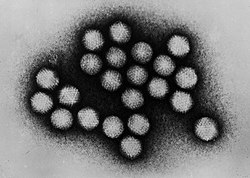 Adenovirus under electron microscopy
 -
 Influenza virus particle
 -
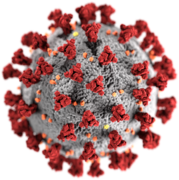 SARS-CoV-2, the virus that causes COVID-19
 -
 Ebola virus virions
 -
 Polymerase chain reaction used in viral diagnosis


See also[edit]
- Virus
- Medical virology
- Clinical virology
- Microbiology
- Infectious disease
- Immunology
- Epidemiology
- Public health
- Viral infection
- Viral replication
- Viral pathogenesis
- Viral evolution
- Viral genome
- Capsid
- Viral envelope
- Baltimore classification
- Bacteriophage
- Antiviral drug
- Antiviral resistance
- Vaccine
- mRNA vaccine
- PCR
- Serology
- Viral culture
- Genome sequencing
- Zoonotic disease
- Pandemic
- Influenza
- COVID-19
- HIV/AIDS
- Viral hepatitis
- Herpesvirus
- Human papillomavirus
- Rabies
- Ebola virus disease
- Dengue fever
- Zika fever
External links[edit]
- Centers for Disease Control and Prevention
- National Institutes of Health
- World Health Organization
- International Committee on Taxonomy of Viruses
| Infectious disease and microbiology | ||||||||||||||||
|---|---|---|---|---|---|---|---|---|---|---|---|---|---|---|---|---|
|
| Microbiology | ||||||||||
|---|---|---|---|---|---|---|---|---|---|---|
This microbiology related article is a stub.
|
| Microbiology: Virus | ||||||||||
|---|---|---|---|---|---|---|---|---|---|---|
|
| Public health | ||||||||||
|---|---|---|---|---|---|---|---|---|---|---|
|
| Medicine | ||||||||||||||||||
|---|---|---|---|---|---|---|---|---|---|---|---|---|---|---|---|---|---|---|
|
| Biotechnology | ||||||||||
|---|---|---|---|---|---|---|---|---|---|---|
|
| Infectious disease and microbiology | ||||||||||||||||
|---|---|---|---|---|---|---|---|---|---|---|---|---|---|---|---|---|
|

Medical Disclaimer: WikiMD is for informational purposes only and is not a substitute for professional medical advice. Content may be inaccurate or outdated and should not be used for diagnosis or treatment. Always consult your healthcare provider for medical decisions. Verify information with trusted sources such as CDC.gov and NIH.gov. By using this site, you agree that WikiMD is not liable for any outcomes related to its content. See full disclaimer.
Credits:Most images are courtesy of Wikimedia commons, and templates, categories Wikipedia, licensed under CC BY SA or similar.
Translate page: - East Asian
中文,
日本,
한국어,
South Asian
हिन्दी,
தமிழ்,
తెలుగు,
Urdu,
ಕನ್ನಡ,
Southeast Asian
Indonesian,
Vietnamese,
Thai,
မြန်မာဘာသာ,
বাংলা
European
español,
Deutsch,
français,
Greek,
português do Brasil,
polski,
română,
русский,
Nederlands,
norsk,
svenska,
suomi,
Italian
Middle Eastern & African
عربى,
Turkish,
Persian,
Hebrew,
Afrikaans,
isiZulu,
Kiswahili,
Other
Bulgarian,
Hungarian,
Czech,
Swedish,
മലയാളം,
मराठी,
ਪੰਜਾਬੀ,
ગુજરાતી,
Portuguese,
Ukrainian

