S-Methylmethionine
S-Methylmethionine (also known as Vitamin U) is a derivative of methionine which is found in various plant species. It was first isolated in 1949 by Garnett and co-workers from cabbage juice, where it was shown to have a protective effect on peptic ulcers in humans.
Chemistry[edit]
S-Methylmethionine is a quaternary ammonium salt that is structurally similar to the amino acid methionine, except that the alpha-hydrogen is replaced by a methyl group. It is synthesized in plants from methionine and S-adenosyl methionine (SAM) via the Yang cycle.
Biological role[edit]
In plants, S-Methylmethionine acts as a methyl donor in a variety of methylation reactions. It is also involved in the synthesis of ethylene, a plant hormone that regulates growth and development.
In humans, S-Methylmethionine has been shown to have a protective effect on the gastrointestinal tract, particularly in the prevention and treatment of peptic ulcers. However, its exact mechanism of action is still not fully understood.
Sources[edit]
S-Methylmethionine is found in a variety of plant species, including cabbage, spinach, and alfalfa. It is also available as a dietary supplement.
Safety[edit]
S-Methylmethionine is generally considered safe when consumed in amounts typically found in food. However, excessive intake may cause mild gastrointestinal symptoms such as nausea and diarrhea.
See also[edit]
.svg) | This biochemistry article is a stub. You can help WikiMD by expanding the page. |
 | This medical article is a stub. You can help WikiMD by expanding the page. |
-
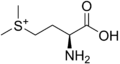 Methylmethionine


Medical Disclaimer: WikiMD is for informational purposes only and is not a substitute for professional medical advice. Content may be inaccurate or outdated and should not be used for diagnosis or treatment. Always consult your healthcare provider for medical decisions. Verify information with trusted sources such as CDC.gov and NIH.gov. By using this site, you agree that WikiMD is not liable for any outcomes related to its content. See full disclaimer.
Credits:Most images are courtesy of Wikimedia commons, and templates, categories Wikipedia, licensed under CC BY SA or similar.
Translate page: - East Asian
中文,
日本,
한국어,
South Asian
हिन्दी,
தமிழ்,
తెలుగు,
Urdu,
ಕನ್ನಡ,
Southeast Asian
Indonesian,
Vietnamese,
Thai,
မြန်မာဘာသာ,
বাংলা
European
español,
Deutsch,
français,
Greek,
português do Brasil,
polski,
română,
русский,
Nederlands,
norsk,
svenska,
suomi,
Italian
Middle Eastern & African
عربى,
Turkish,
Persian,
Hebrew,
Afrikaans,
isiZulu,
Kiswahili,
Other
Bulgarian,
Hungarian,
Czech,
Swedish,
മലയാളം,
मराठी,
ਪੰਜਾਬੀ,
ગુજરાતી,
Portuguese,
Ukrainian

