Steroid 11β-hydroxylase
Steroid 11β-hydroxylase is an enzyme that catalyzes the hydroxylation of steroids at the 11-beta position. This enzyme is primarily found in the adrenal gland and is a key player in the production of cortisol and aldosterone, two important hormones in the human body.
Function[edit]
Steroid 11β-hydroxylase is a member of the cytochrome P450 family of enzymes, which are involved in the metabolism of a wide variety of substances, including drugs, toxins, and endogenous compounds such as steroids. Specifically, this enzyme catalyzes the conversion of 11-deoxycortisol to cortisol and 11-deoxycorticosterone to aldosterone.
Cortisol is a hormone that plays a crucial role in the body's response to stress, while aldosterone is involved in regulating the balance of salt and water in the body.
Clinical significance[edit]
Mutations in the CYP11B1 gene, which encodes the steroid 11β-hydroxylase enzyme, can lead to congenital adrenal hyperplasia, a group of inherited disorders that affect the adrenal glands. These disorders can cause a variety of symptoms, including abnormal growth and development, and problems with the body's ability to respond to stress.
See also[edit]
References[edit]
 | This medical article is a stub. You can help WikiMD by expanding the page. |
-
 Cortodoxone
 -
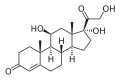 Cortisol
 -
 11-Deoxycorticosterone
 -
 Corticosterone
 -
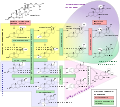 Steroidogenesis
 -
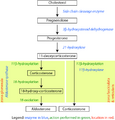 Corticosteroid biosynthetic pathway in rat
 -
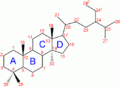 Trimethyl steroid nomenclature


Medical Disclaimer: WikiMD is for informational purposes only and is not a substitute for professional medical advice. Content may be inaccurate or outdated and should not be used for diagnosis or treatment. Always consult your healthcare provider for medical decisions. Verify information with trusted sources such as CDC.gov and NIH.gov. By using this site, you agree that WikiMD is not liable for any outcomes related to its content. See full disclaimer.
Credits:Most images are courtesy of Wikimedia commons, and templates, categories Wikipedia, licensed under CC BY SA or similar.
Translate page: - East Asian
中文,
日本,
한국어,
South Asian
हिन्दी,
தமிழ்,
తెలుగు,
Urdu,
ಕನ್ನಡ,
Southeast Asian
Indonesian,
Vietnamese,
Thai,
မြန်မာဘာသာ,
বাংলা
European
español,
Deutsch,
français,
Greek,
português do Brasil,
polski,
română,
русский,
Nederlands,
norsk,
svenska,
suomi,
Italian
Middle Eastern & African
عربى,
Turkish,
Persian,
Hebrew,
Afrikaans,
isiZulu,
Kiswahili,
Other
Bulgarian,
Hungarian,
Czech,
Swedish,
മലയാളം,
मराठी,
ਪੰਜਾਬੀ,
ગુજરાતી,
Portuguese,
Ukrainian

